Hail and storm damage roof repair in Kansas City, MO: claims, costs and deadlines
One call to (855) 512-1072 reaches Roofers Hotline for roof repair, roof replacement, leak repair, storm damage and inspections in Kansas City and 8 towns across Jackson, Cass, Clay, Lafayette and 1 more county. Calls are answered from 144 ZIP codes in the Kansas City area. Calls are answered 24 hours a day and every estimate is put in writing before work starts.
Key takeaways
- Jackson County saw 13 thunderstorm wind events of 65 knots or more since 2015, NOAA records show, each one a shingle repair somewhere.
- 64% of homes inside the city limits were built before 1980, Census estimates show, and the median build year is 1968.
- OpenFEMA counts 23 weather-related disaster declarations for Jackson County, with the last one in 2019.
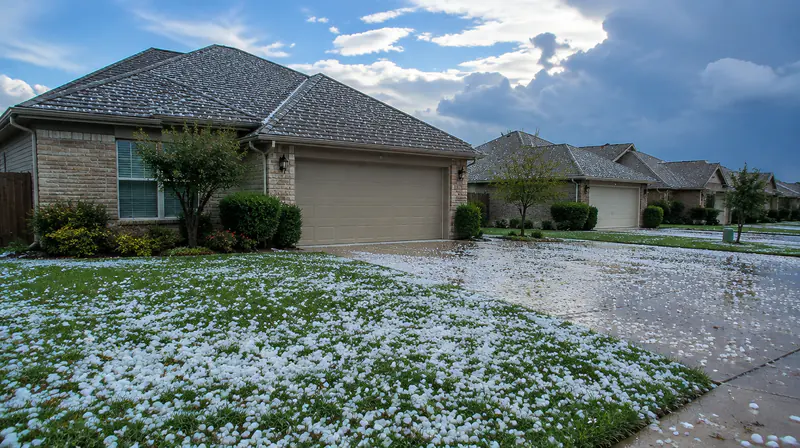
A hailstorm goes through Kansas City in the evening, and by morning you find dented gutters, granules in the downspouts and a neighbor already talking to a stranger with a truck and a clipboard. Roofers Hotline answers calls 24 hours a day for hail and storm damage roof repair, so you can have the roof looked at before anyone pressures you.
Read on for the area's storm record, the first 48 hours, how to document damage, what to know about a Missouri claim and how to spot storm chasers. NOAA's Storm Prediction Center logged 336 hail reports within 15 km of the metro from 2000 to 2024, a Very High band, so call and ask for a written estimate before any work starts.
Kansas City's storm record
Hail here is a regular event, not a rare one. Jackson County had 116 hail events of one inch or larger in NOAA's Storm Events records since 2015, and the largest stone in that record measured 3 inches. The same county record lists 18 tornadoes and 13 damaging thunderstorm wind events.
Hail season runs from February through August, with April the busiest month, so spring is when roofs take the hardest hits. Hail of 2 inches fell within 25 km of the city as recently as May 8, 2024, which is large enough to bruise shingles and crack tile.
If a storm has passed over your street, call Roofers Hotline for roof repair and a written estimate before any work starts.
For this service locally, see emergency roof repair for this metro, booked across the metro's 144 ZIP codes with a written estimate first.
The first 48 hours
The first two days after a storm are for stopping further damage, not for signing anything. Walk the property from the ground, look for water stains on ceilings and check the attic for daylight or damp insulation. If water is coming in, a temporary tarp is the usual short-term step, and Roofers Hotline handles emergency tarping and leak repair around the clock.
Here is how it often goes. After an April storm you notice a wet spot on a bedroom ceiling. You call that night, describe the spot and the storm, and book an inspection. The roof is checked, the tarp goes on if it is needed, and you receive a written estimate for the permanent repair.
Call as soon as you see a leak, because water that sits in the attic keeps doing damage.
Roofers Hotline also handles roof repair in Kansas City here, with photographs taken before any estimate is written. See what roof repair costs for prices by material and job, and the local range is above.
Documenting damage
Good records make every later conversation easier, whether it is with a roofer or an insurer. Photograph the roof from the ground, then the gutters, vents, siding and any dented metal, and note the date of the storm. Save photos of interior stains too, and keep receipts for any emergency work.
Housing age matters here. Census estimates for 2019 to 2023 show about 64% of Kansas City homes were built before 1980, and the median home was built in 1968. Older roofs often have several layers or worn decking, so hidden damage is common.
Have your photos and the storm date ready when you call. The written estimate from Roofers Hotline lists what was found and what the repair covers.
The job for emergency roof repair runs from the first call to the scheduled work, step by step.
Filing a claim in Missouri
Insurance rules are set by your policy, so read it before the storm season ends and find your deductible. Roofers Hotline does not file claims for you, and deductibles are never waived or rebated. What a roofer can give you is a clear written estimate and photos of the damage to share with your insurer.
Federal records show 23 disaster declarations that include the county from 1965 to date, the latest being Severe Storms, Tornadoes, And Flooding on July 9, 2019. Big storms here are a documented pattern, which is a good reason to know your policy terms now.
Call for a post-storm inspection so you have the damage described in writing before you talk to your insurer.
Storm-chaser red flags
Door-knockers appear within days of a hailstorm, and the warning signs are consistent: pressure to sign today, a demand for full payment up front, no local address and an offer to absorb your deductible. Waiving a deductible is not something to accept.
Missouri has no statewide roofing license, so check your city or county for local contractor licensing and ask for a certificate of insurance. You can also look up licensing questions through the Missouri Secretary of State. A real estimate is written, itemized and given before work starts.
If someone has already knocked on your door, you do not have to decide on the spot. Call Roofers Hotline for roof repair in Kansas City and ask for a written estimate first.
- 116 Hail events, one inch or largerJackson County, since 2015
- 13 Wind events, 65 knots or moreJackson County, since 2015
- 18 TornadoesJackson County, since 2015
- 23 Federal weather disaster declarations, from 1965 to dateJackson County, last July 9, 2019
- 336 Hail reports within 15 km of the city centerSPC, 2000 to 2024, Very High band
Sources: NOAA Storm Events (Jackson County); OpenFEMA declarations (Jackson County); NOAA SPC reports. Updated October 2026.
Why call
Why Roofers Hotline in Kansas City
- We track every storm the county records These numbers come from NOAA, FEMA and Census records, including 243,692 housing units inside the city limits.
- Local roofers who know Jackson County roofs Ice dams come with 93 freezing days and 11 inches of snow in a normal year at the nearest station.
- Emergency tarping and leak response, day or night The nearest weather station records about 38 inches of rain a year, and most leaks start at flashing, pipe boots and valleys.
- Deductibles are never waived or rebated What the policy covers, what you pay, no games.
Questions
Questions about storm damage roof repair here
How often does hail hit Kansas City roofs?
Often. Jackson County recorded 116 hail events of one inch or larger since 2015 in NOAA's Storm Events database, and April is the peak month. After any storm with hail, call for an inspection, since damage can be invisible from the ground.
Do I need a licensed roofer in Missouri?
Missouri has no statewide roofing license, so check your city or county for local contractor licensing and ask for a certificate of insurance. The Missouri Secretary of State is a place to start. Ask for the written estimate before you agree to any work.
Will a roofer pay my insurance deductible?
No. Deductibles are never waived or rebated, and an offer to cover yours is a red flag. Read your policy to know your deductible, and call for a written estimate that spells out the repair so you can compare it with your coverage.
A common question across the metro is How long does a roof last?
Get roofing quotes in Kansas City
Takes about a minute. Tell us the ZIP code and what the roof is doing, and a local roofer calls you back to book an inspection and written estimate.
Start your requestOr call: the number at the top of this page is answered 24/7.