Roof emergency warning signs in San Jose: when to call for emergency roof repair
Roofers Hotline books roof repair, roof replacement, leak repair, storm damage and inspections in San Jose and 5 towns across Santa Clara, San Mateo and Santa Cruz counties from one number, (855) 512-1072. Calls are answered from 144 ZIP codes in the San Jose area. Calls are picked up 24/7, and no work starts without a written estimate.
Key takeaways
- Lifted shingles follow wind, and the NOAA log for Santa Clara County shows 2 wind events of 65 knots or more since 2015.
- Santa Clara County has been in 15 federal weather disaster declarations, OpenFEMA records show, the latest in 2023.
- Large hail is uncommon in Santa Clara County, with 0 events of one inch or larger since 2015 in NOAA's records, so wind and rain do more of the damage.
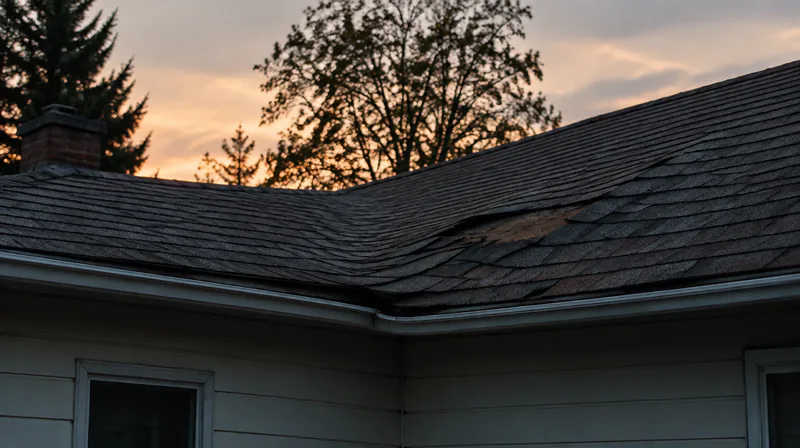
A brown stain spreading across a ceiling, daylight showing through the attic boards, or shingles scattered on the lawn after a windy night: each of these means water can get in now, and the next rain makes it worse. Roofers Hotline answers calls 24 hours a day for roof emergencies in San Jose.
Here you will find the signs that cannot wait, what to do in the first hour, what an emergency visit includes and how insurance deadlines work in California. The metro's housing is older, with a median build year of 1975 and 61% of homes built before 1980, so aging roofs are common here. If you see any of these signs, call now and ask for a written estimate before any work starts.
Signs that cannot wait
Some roof problems can sit for a few weeks. Others need a call the same hour you notice them. Water dripping or running through a ceiling, a sagging section of roof, exposed decking where shingles have blown off, and daylight visible in the attic all belong in the second group, because each one lets rain reach the framing and insulation.
Wind is the storm measure to watch in San Jose. Santa Clara County had 6 thunderstorm-wind reports in NOAA's storm records since 2015, and 2 of them reached 65 knots or more. Hail is rare here, with none of one inch or larger in the county record, so most emergency damage comes from wind, from the winter storms that hit the Bay Area, or from roofs that are simply worn out.
If you see any of these signs, call Roofers Hotline and describe what you see. Calls are answered 24/7.
For this service locally, see San Jose emergency roof repair, booked across the metro's 144 ZIP codes with a written estimate first.
The first hour
Start with safety. Stay off the roof, keep people away from any sagging ceiling, and move furniture and valuables out of the wet area. Put a bucket under a drip, and if a ceiling is bulging with water, poke a small hole to let it drain in a controlled way rather than letting it fail all at once.
Next, take photos of the damage from the ground and from inside the house, with the date visible on your phone. Those photos help the roofer scope the repair and help you if you later talk to your insurer.
Here is one example. After a windy night, a homeowner finds three missing shingles and a damp spot in a bedroom ceiling. They photograph both, set a bucket down and call. The visit that follows covers a temporary seal over the exposed area and a written estimate for the permanent repair.
Call as soon as you have the photos. The sooner the opening is covered, the less water gets in.
One call also covers how roof repair works here, photographed first and estimated in writing. Prices by material and job are under roof repair cost, with the local range shown above.
What an emergency visit includes
An emergency visit is built to stop water first and answer the bigger questions second. The roofer checks the damaged area, looks at the decking and flashing around it, and covers the opening with a tarp or sealant so the next rain stays out. You also get a written estimate before any work starts for the lasting repair, so you can see what the fix involves before you agree to it.
The age of the roof shapes that estimate. With 61% of San Jose homes built before 1980, many roofs here have layers of older material, and a patch on a worn roof may not hold. The estimate can show whether a repair makes sense or whether replacement is the better call.
California requires roofing contractors to hold a CSLB license, usually the C-39 Roofing classification. Look up any license at CSLB. Call to book the visit.
For the work itself, read how emergency roof repair works, which follows a job from the first call onward.
Insurance deadlines in California
Insurance policies set their own time limits for reporting damage, and those limits differ from one policy to the next. Read your policy or ask your insurer how long you have, and note whether the policy lists a separate deductible for wind or storm damage. Deductibles are never waived or rebated, so plan for yours when you look at repair costs.
Documentation matters more than speed alone. Keep your dated photos, any receipts for temporary repairs, and the written estimate. Water that sits in a roof for weeks tends to cause more damage, and a delay can make it harder to show what caused the problem.
California has a record of severe weather: 15 federal disaster declarations have included the county from 1977 to date, and the most recent, on April 3, 2023, covered severe winter storms, straight-line winds, flooding, landslides and mudslides. Call Roofers Hotline first to stop the leak and get the written estimate in hand.
- 0 Hail events, one inch or largerSanta Clara County, since 2015
- 2 Wind events, 65 knots or moreSanta Clara County, since 2015
- 15 Federal weather disaster declarations, from 1977 to dateSanta Clara County, last April 3, 2023
- 18 Hail reports within 15 km of the city centerSPC, 2000 to 2024, Low band
Sources: NOAA Storm Events (Santa Clara County); OpenFEMA declarations (Santa Clara County); NOAA SPC reports. Updated October 2026.
Why call
Why Roofers Hotline in San Jose
- We track every storm the county records 343,058 housing units inside the city limits are on record here, and NOAA, FEMA and Census data feed every page here.
- Local roofers who know Santa Clara County roofs Of the 343,058 housing units the Census counts inside the city limits, roughly 56% are owner-occupied.
- Emergency tarping and leak response, day or night With 21 hot days a year at the nearest station on record, a tarp or temporary dry-in stops the second round of damage while the repair is scheduled.
- Calls answered 24 hours a day, 7 days a week The line is open around the clock because roofs fail at every hour.
Questions
Questions about roof emergency warning signs here
What counts as a roof emergency in San Jose?
Active leaks, sagging roof sections, missing shingles that expose the decking, and daylight visible from the attic all count. Each lets rain reach the framing. Take photos, keep people clear of any bulging ceiling, and call. Calls are answered 24 hours a day.
Does the metro get hail damage on roofs?
Rarely. NOAA's county record since 2015 shows no hail of one inch or larger, and the metro sits in the Low hail band. Wind and winter storms cause more damage here. If you suspect storm damage, call for an inspection.
Should I go on my roof to check the damage?
No. Wet shingles and decking are slippery, and damaged sections may not hold your weight. Look from the ground, take photos, and check the attic for daylight or damp insulation. Then call Roofers Hotline and describe what you see.
How do I check a roofer's license in California?
California requires roofing contractors to hold a CSLB license, usually the C-39 Roofing classification. You can look up any license at CSLB before work begins. Ask for the written estimate first, then check the license number against that record.
Across the metro, the question that comes up most is Does homeowners insurance cover roof replacement?
Get roofing quotes in San Jose
Takes about a minute. Tell us the ZIP code and what the roof is doing, and a local roofer calls you back to book an inspection and written estimate.
Start your requestOr call: the number at the top of this page is answered 24/7.